Consumer product
MiniPong
- Brand definition
- Web design
- Content & campaigns
- Role
- Industry
- Year
- Brand definition, Web design, Content
- Consumer product
- 2025
Project overview01
The product was already selling. The digital side had never caught up.
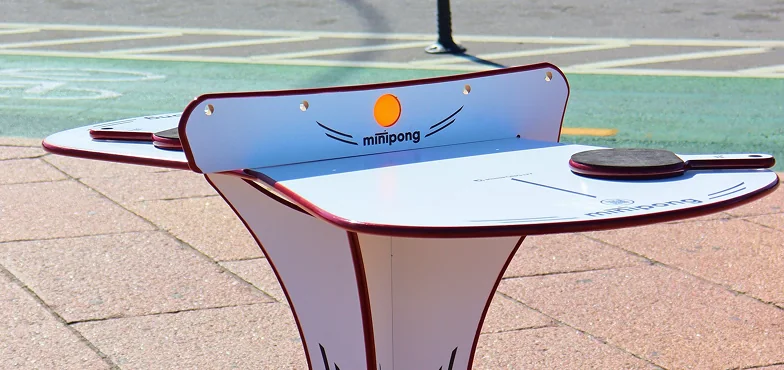
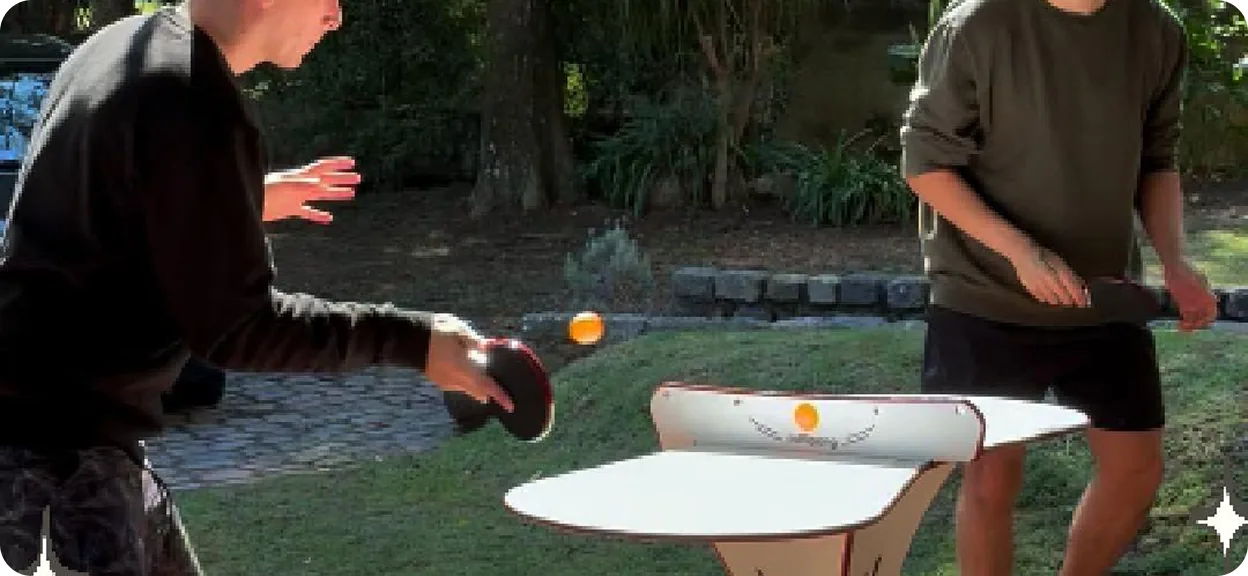
MiniPong makes a portable ping pong table that folds down and doubles as a picnic table. It was already selling in the United States and stock was moving faster every month. What it did not have was a brand holding that up: no site of its own, a social channel below the quality of the object, and no settled tone, type or colour to make anything look like it came from the same company.
They came to us for marketing and content. We scoped it wider: define the brand first, then produce against it. Sit down, work out what was actually slowing them, agree a roadmap, and run the campaigns alongside them rather than handing over files.
The challenge02
MiniPong was growing in the States with nowhere to send anyone who asked. No site, no deck, nothing that answered who was behind the table. A proposal was already going out and it needed a presentation attached, so the brand and the site ended up sharing one deadline: a week.
At a glance03
The table was better than everything around it
What was behind
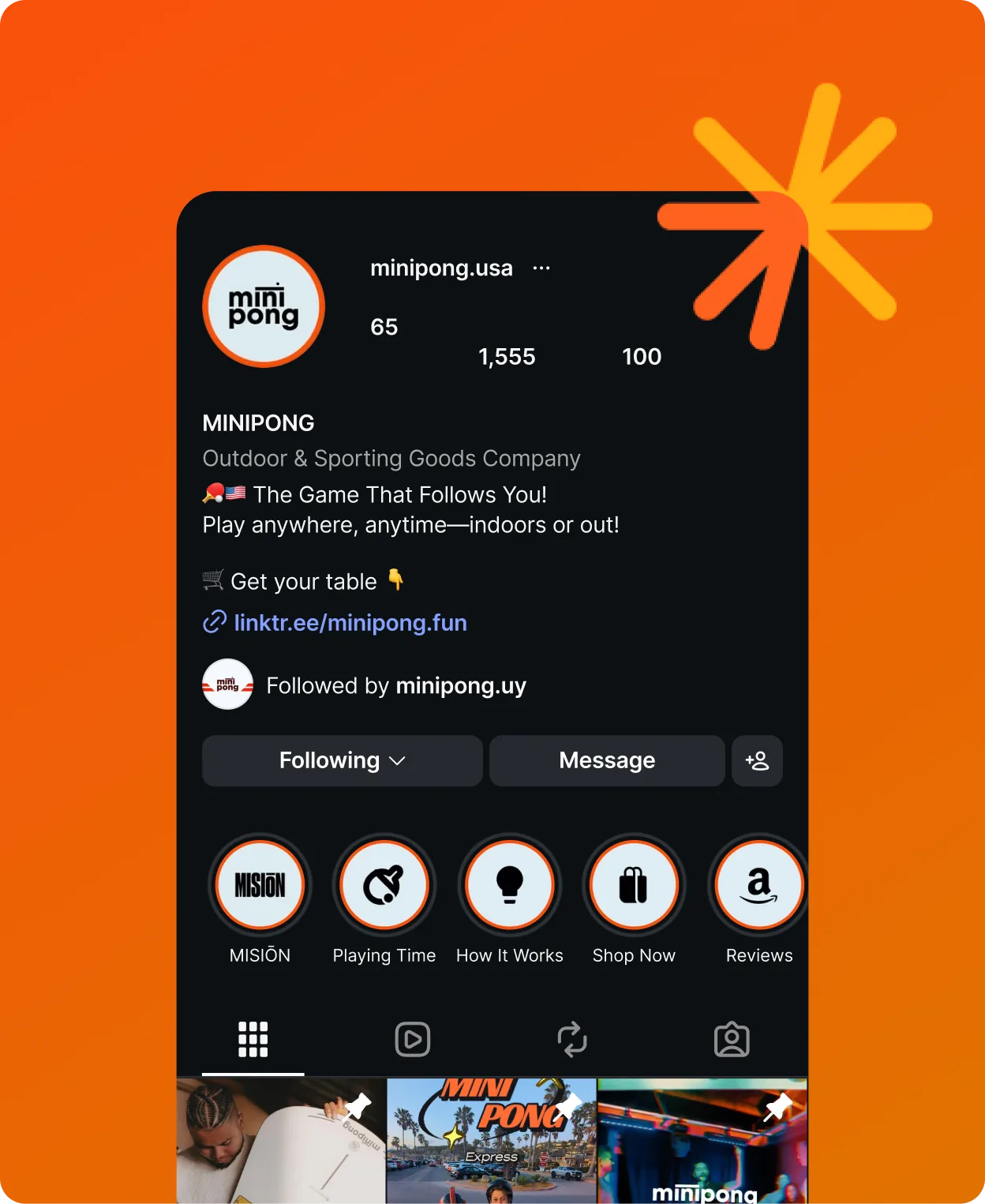
Sales were climbing in the States while the brand stayed behind: no website, a channel below the quality of the product, and nothing settled about how any of it should look or sound.
Route to the sale
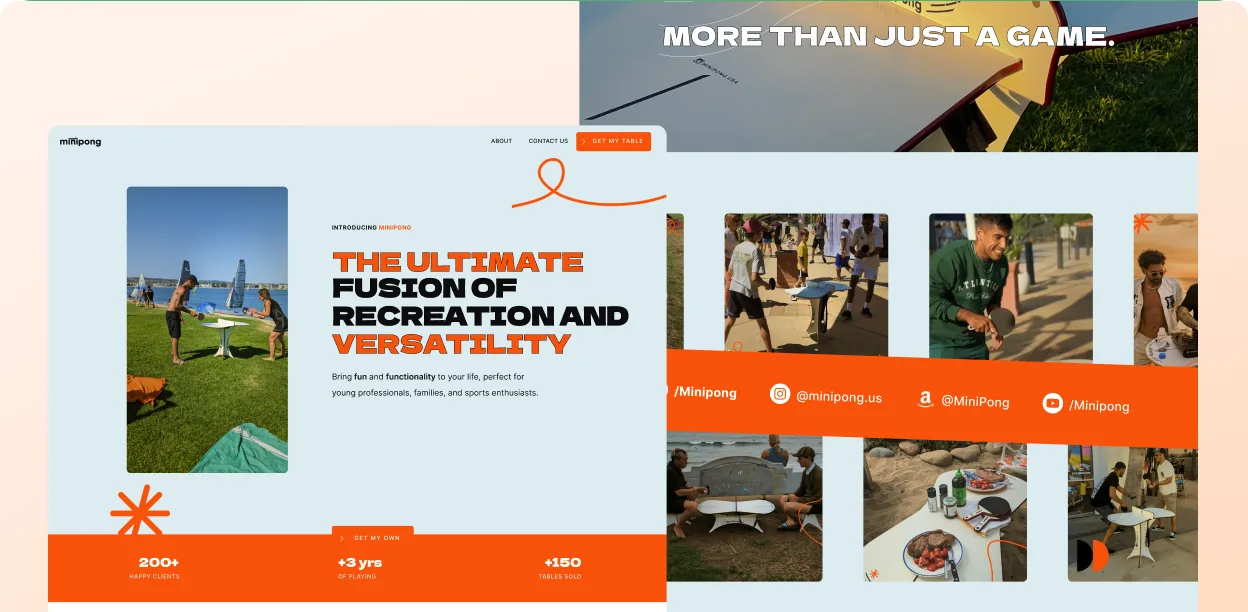
The site tells the story and then gets out of the way: what the table is, what it turns into, where it came from, and a route straight to the listing that already handles the selling.
Brand rules
One set of rules for everything that leaves the company. Type, colour, voice and photography, so the site, the deck and the channel read as the same brand.
How it ran04
A week for the site, longer for the brand
The deadline was on the site, not on the thinking. The rules for how MiniPong should look and sound had to exist first, or the page would just be another thing to redo later.
Sit down first
- What is selling
- What they get asked
- What is missing
Set the rules
- Tone and voice
- Type and colour
- Photography
Build the site
- One week
- The story
- Route to Amazon
Produce against it
- Social content
- Decks
- Campaigns
Hand it over
- Roadmap
- A way to keep going
Scope of work05
What the work covered
Listen first
Where the sales came from, what people kept asking, what they had to send. The roadmap came out of that.
Settle the brand
Tone, voice, type and colour agreed before anything was produced against them.
Ship in a week
The proposal was already going out. Start to live in seven days.
Send them to Amazon
The listing already sells. The site does the part it cannot, then hands the buyer over.
Shoot it ourselves
Photography and social produced directly, so the channel caught up with the object.
Hand back a system
Decks, templates and a way of running content without us.
Scoping06
Give the page one job
A week is a filter, not a compromise. The page got a single job: say who MiniPong is well enough that the listing can close the sale.
One page
Everything a buyer needs before the listing.
Four claims
Each carried by the photograph that proves it.
One route out
Every path ends at the Amazon listing.
The rest is content
What changes weekly lives in the channel.
Product thesis07
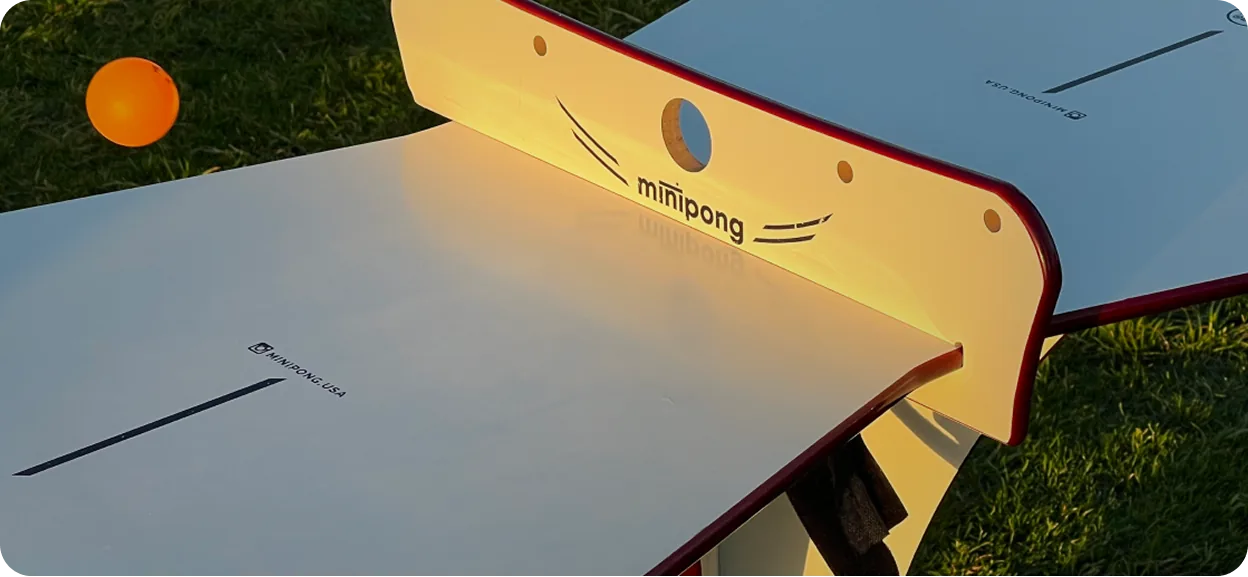
One table that is also a picnic table is easy to say and hard to show. Nothing on the site claims it: the argument is split into what it is, what it turns into, how it packs down and what the finish is like, each with the photography to prove it. Then the page stops and hands you to the listing, because Amazon already does the selling well.
Measured impact08
What changed after launch
The brand was the deliverable, but the numbers behind it are what said it worked.
- Sales doubled
- United States sales volume doubled after the site and content launched.
- Reach went up with it
- Views climbed once the channel was produced to the standard of the object rather than around it.
- A community, not an audience
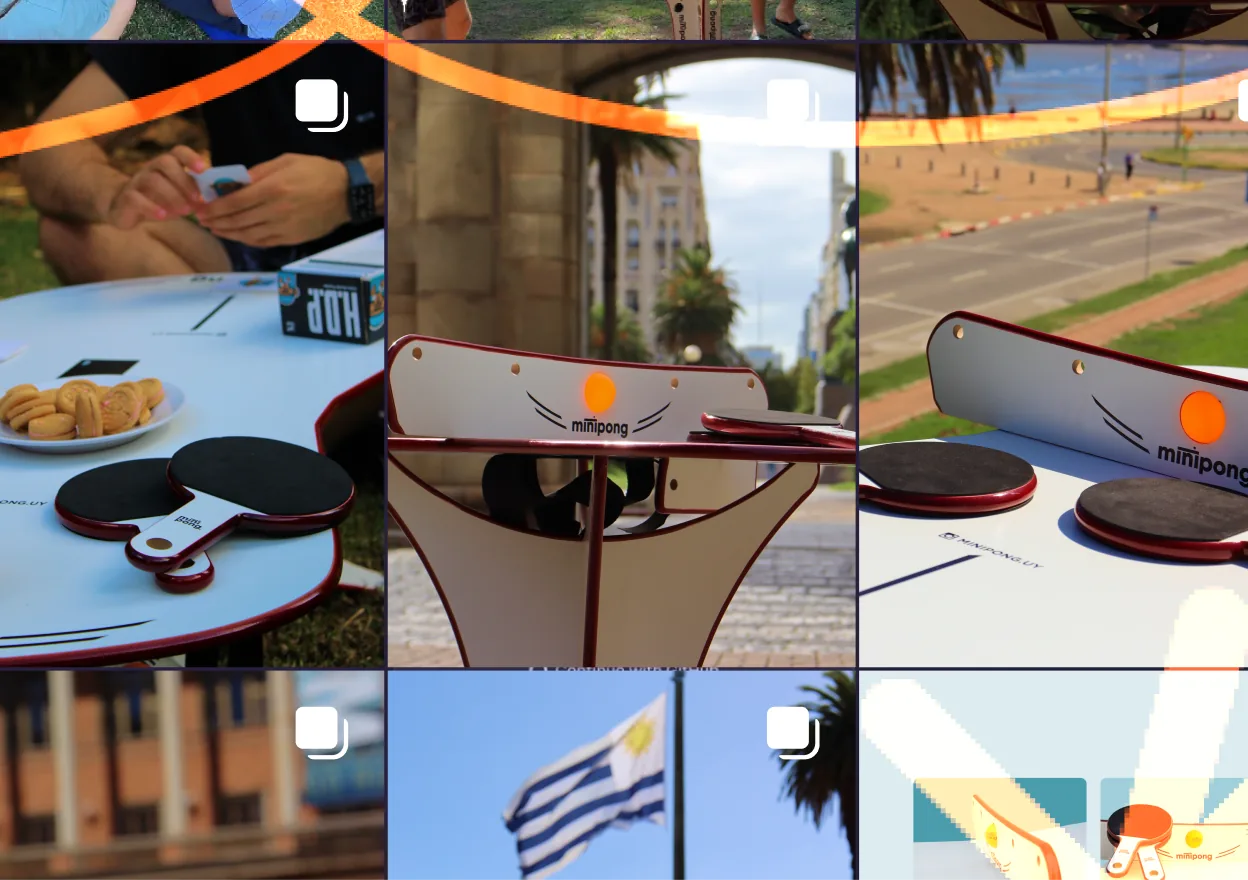
- People started posting their own tables. The content stopped being something the brand pushed out and became something it could collect.
- A second market
- It grew far enough to open MiniPong in Uruguay, with its own account and its own audience rather than a translation of the American one.
Design system09
Colour and type
- Signal orangeHex: F8520B
- Sun yellowHex: FFB113
- Ice blueHex: DDECF0
- InkHex: 0D0D0D
- PaperHex: FAFAFA
Display
Sato
Every heading on the site. Wide, heavy and set in caps for the claims the product has to make loudly.
Body
Red Hat Display
Running copy: the paragraphs that explain the table once the headline has done its job.
Labels
Gotham
Buttons, navigation and the small caps labels. Ultra for the loudest moments, Book everywhere else. A system sans stands in where the licensed family is unavailable.
Outcome
- A site live in a week, carrying the story and pointing every buyer at the Amazon listing.
- A defined brand: tone, voice, typography and colour, applied across the site, the decks and the channel.
- Social content produced to the standard of the product rather than behind it.
- A roadmap and a way of working the team could keep running after we stepped back.